Showing posts with label informational interview. Show all posts

Sunday, December 6, 2009

Informational Interview with writer Catherine Thimmesh

I could maybe see myself as a children's book author in the future so I knew that I wanted to interview one for this project. I looked through a database of local authors that the St. Paul Library has on their website, and when I went to Catherine Thimmesh's website I knew that I had to meet her; she's a trapeze-swinging woman who writes books about how awesome women and girls are. That's my kind of lady! On November 19th I met with Catherine at Starbucks in Highland Park where she shared her story with me.


Here's some info on Catherine:
"Catherine Thimmesh is the Sibert Medal-winning author of Team Moon. Her newest book, Lucy Long Ago, explores the scientific sleuthing that surrounded the famous fossil hominid, Lucy—a key clue in the search for human ancestors. Madam President, a New York Times notable book, was recently updated to reflect recent advances for women in politics, including Hillary Clinton's historic run for the presidency. Catherine's previous books, Girls Think of Everything and The Sky's the Limit, have been translated into Korean and Chinese. Girls Think of Everything won the 2001 IRA Children's Book Award, was a Children's Book of the Month Best Nonfiction Book 2000, a Minnesota Book Award finalist, and a Smithsonian Notable Book 2000 (amongst other honors). The Sky's the Limit won the Minnesota Book Award in 2002, was a Smithsonian Notable Book 2002, and an Outstanding Science and Social Studies Trade Book for Children 2002. The author lives in Eden Prairie, Minnesota with her husband and two children."

Catherine is a University of Minnesota alum! While in college Catherine didn't really know what her passion was—she was interested in a lot of things, but didn't have a single driving obsession that would drive her towards a specific career. She always liked writing, but it never occurred to her that she could doing writing beyond journalism as a career. She ended taking lots of interesting classes and up majoring in art history with a concentration in film, but didn't know what she wanted to do career-wise.

After graduating she "did the restaurant circuit" until opening an art gallery in Minneapolis when she was 26. The experience of owning an art gallery helped Catherine discover a lot about herself. One thing that Catherine did for the art shows was show filmed interviews with the artists about their work and processes. This involved a lot of research which ended up relating to the research Catherine does now with her writing. She ending up having to close the gallery after 3 years; she loved everything but the sales part.

When she was a gallery owner Catherine had a lot of free time (unless there's a show, only about 3 people will stop in on any day), so she decided to take writing classes at The Loft Literary Center because she enjoyed writing. This was the catalyst for Catherine deciding to become a writer! She took a class on writing for children and discovered that she had a natural ability for it. In a second class that she took, she wrote an article and submitted it to a children's magazine and they bought it! Being able to sell her writing opened up Catherine to the idea of being a children's book writer.

After closing the art gallery, Catherine went about the transition into being a writer pragmatically by giving herself a 2 year time-frame to publish a book. She then got a job in marketing at a local children's book publishing house so she could learn about the industry. After 6 months of working there she built up the nerve to ask what they look for in manuscripts, and after she showed them one of her own she was offered a book deal. It ended up falling through, but luckily during this time she sold a book independently.

Catherine's advice to other writers is that networking is extremely important. Also, invest in conferences. Catherine was once a lead volunteer at a local book conference, which gave her the opportunity to interact with one-on-one with prominent editors. One of these editors took interest in her manuscript, but wanted Catherine to change from fiction into nonfiction. Catherine wasn't sure if kids liked nonfiction, but she didn't want to turn down the opportunity. Catherine said that because she had the personal contact with the editor they were willing to work with her on the idea, instead of just rejecting her. This opportunity turned into her book, Girls Think of Everything: Stories of Ingenious Inventions by Women.


Catherine has had 4 other children's books published! Right now she is working on a picture book, and recently wrote a screenplay.When Catherine starts on a book, she starts with a complete vision of the book--how big it will be, what it will look like, etc. Catherine does market research before she starts a project to ensure that there aren't already a lot of books written about a topic. She also considers if there is a market for that kind of book.

Catherine says that it is very important to accept (and celebrate!) the small victories and successes. For example, accept positive feedback, even if it does come from a rejection. She also said that writers need to have thick skin to have their work critiqued.

Catherine doesn't have a typical day in her job, which is something that she enjoys. She also accepts that she works slowly; you can't force creativity. A huge benefit of being a writer is flexibility, but there are always the business things that you have to do during the day, like making phone calls within business hours or doing speaking engagements. It's extremely necessary to be disciplined with your writing when you create your own schedule.

For Catherine, the most rewarding part of being a children's book author is spending with the kids during classroom visits to discuss her books. It's nice to know the kids' personal reactions to her books. Catherine's greatest accomplishment came with her book, Lucy Long Ago. A 4 year girl old loved loved the book and one day informed her mother that she now wanted to be an avian paleontologist when she grows up instead of a Disney Princess!! After hearing that Catherine knew she could retire happy!

I asked Catherine about the climate of the book industry and she said that right now the publishing industry is in “melt down mode” as many intellectual property based industries are, due to digital pirating. Also, Wal-mart and other "big-box" stores have changed the industry because they act as gatekeepers. Despite the huge changes taking place in her industry, Catherine doesn't seem concerned. "Just let the publishers worry about it. No one knows where the trends are going." However, as an artist you have to stay business-wise in order to protect yourself.

Catherine's advice for people pursuing their dreams:
-It's all comes down to persistence.
-Learn how to “play the game” of the field that you're in.
-Get feedback from outside eyes and ears, but know when to throwout the feedback if you really believe in what you've created.
-Don't take yourself too seriously.
-Don't try to please everyone.

Thank you Catherine! For sharing your story and for the awesome books that you write

Tuesday, November 24, 2009

"Make friends with your fears": An informational interview with Aby Wolf

On October 29th I met up with Aby Wolf, singer, songwriter, and visual artist at Spyhouse Coffee Shop In Minneapolis for an informational interview. We talked about her path in music and art and about the creative process.

(photo by Sharolyn B. Hagen)
"Aby Wolf has an American Idol–worthy voice that would likely win her a callback on the show, probably even from hard-to-please judge Simon Cowell. It’s rich, thick, soulful. You can even imagine her singing the national anthem at the Super Bowl. It’s that stirring a sound. The songs on Wolf’s debut album rightfully showcase her pipes. She’s engaging enough musically, as on the rousing R&B–driven number “What U Waitin 4,” to almost make you overlook her writing chops. Her lyrics are gracious, tender, and often gazing well into the future, where she’ll likely be sitting pretty atop the charts." —Jessica Chapman, Minnesota Monthly

When I decided to do this project I obviously was eager to talk to singer/songwriters, so I was very excited to meet with Aby. It was so great talking with her because she is so honest, purposeful and self-aware.

Aby is from a small town in Illinois, and always knew that she wanted to be a singer. She credits 2 experiences as what sealed her path:
1. Going to Illinois all-state choir while she was in high school
2. Singing back up at a Honey Dogs show

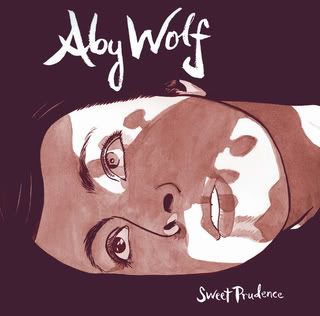
After high school Aby moved to Minneapolis and originally started at the U of M, but ended up switching to MCAD to pursue drawing. While working on visual art she also began writing music, and in 2009 released her first album, Sweet Prudence. Her first album was a "feeling things out" process of what it's like to put your work out there.


We talked quite a bit about what it's like to release creative work out into the world. Aby noted that it's kind of scary when your dream space and reality come together; it seems like this is something that Aby's going through right now. I think that a lot of people can relate to that (myself included), and I think that's one thing that prevents people from following their dreams. When your dreams merely in your head and your heart they're safe. Nothing can mess with them.

Aby also told me about how she takes voice lessons from a Buddhist teacher, which is SO COOL. She's also been involved with the The Minnesota Zen Meditation Center. Again, AWESOME.

Aby believes that it's important to honor your individual artistic process, which is also just great advice. She fits her process into her everyday life: her creativity is always there. Aby tries to "breathe life" into her day job as a server, which I imagine is necessary so that she's not too burnt out to be creative. I asked Aby if she ever feels pressure to pursue a more "normal" career, and she responded that the pressure isn't that she should get a "normal job," it's that she make a living off of her music and art.

We also talked about the amazing book Writing Down the Bones by Natalie Goldberg, which we've both read. A big lesson from this book is that it is important to let in the ideas unedited. Also, discipline is necessary because creative work is not always fun. Writing is a process of struggling and wrestling, it's an interaction. You have to step back and actually listen to what that interaction is. You can't force it and the interaction becomes the song.

When it comes to material, Aby said that lyrically, we don't need grand new ideas. Her work tends to be about returning to the simple things she already knows.

It was great to have someone be honest; the rock star/artist mythology is that songwriting (or really creating any kind of art) and performing comes naturally and it's easy for people who are meant to do it. That is not really me, and it was great to have Aby shatter that myth for me.

Both the rewarding and difficult part of her career is that it's never easy. She directly has to face her fears in singing and performing. Sometimes it's rewarding and sometimes it's hell. It is what it is. It's not perfect or easy. Aby feels like she doesn't have a choice in her path. There is all of the momentum behind her; everything has led her to this place.

Aby's thought's on finding one's path: "If you're working hard on something that's meaningful to you, the lessons you learn will be applicable throughout your life." Aby's (amazing) advice is to learn how to make friends with your fears. It's not about trying to get past them because they'll always be there. Aby's resources or "keys" are Art and Fear (again!), and The Artist's Way, which I've done (twice!) and want to do again.

Aby's advice for someone who wants to follow their dreams: Just do it. Make friends being afraid. She deals with this everyday. Your future is completely dependent on where you put your intention. You have to surrender to the fact that it's scary and hard.

After talking with Aby, I just feel so good and so relieved. The advice above was very comforting to me. I sometimes doubt my dreams because they involve doing things that don't always come easy for me, and things that quite honestly scare the living daylights out of me some of the time. Aby is living proof of how great and rewarding it is to make friends with your fears.


Thank you so much Aby! You are amazing.

Thursday, November 5, 2009

Informational Interview with arts administrator Judy Bartl

On November 5th I met with Judy Bartl, Program Director of the University of Minnesota/Guthrie B.F.A program in her office in the Rarig Center on the U of M campus. Judy had so much wisdom and light! With her entrepreneurial spirit and passion for the arts, Judy has worked a huge variety of jobs (she once sold tombstones!) and has always been open to new experiences. These qualities are what brought her to where she is now: at a job that she loves.

Here's a bit about Judy:
“University of Minnesota/Guthrie Theater BFA Actor Training Program Director, has contributed more than two decades of experience in the theater to the BFA Actor Training Program. Her arts management path took her from The Guthrie Theater's Company Manager to Mixed Blood Theater as Director of EnterTraining. She has also spent time as 'J' in J&S Casting - Casting Directors who worked with Disney films, the Ordway and many commercial projects. Her personal experience for this Program comes from playing the role of Mother for over 20 years.”

When Judy graduated from college she wanted to pursue a career in acting. However, gradually and naturally her path brought her to the administrative side of the arts. It was never her plan to end up in academia.

Judy was a company manager of the Guthrie Theater, and when the Guthrie created the B.F.A program with the University of Minnesota, Judy was asked to be the Program Director. In most instances Judy has been able to “create” her own jobs and enjoys that as program director she gets to create her own “business” within the greater structure of the University.

Because of the wide variety of things that Judy does for her job, there's no typical day, which is something that Judy likes about it.

Judy says that the most rewarding part of her jobs is watching the students develop, from the time she meets them as high school seniors to when they graduate with their B.F.A. The parts Judy doesn't like about her job are having to evaluate her faculty. They're artists, and she wants them to feel supported. Also, she doesn't like that there is always a lack of money and they are continually fighting for more funding.

I asked Judy about how the current poor economy has affected her field and she said that changes have mainly occurred in dealing with parents who are concerned about their kids wanting to major in the arts. Also, more and more arts management companies need strong leaders to deal with these difficult times.

Also, a current trend in the theater world is trying to get younger audiences, by changing theater conventions. For example, "conventional" theater doesn't exactly appeal to today's young people: no talking, no cell phones, have to dress up, etc.

For those interested in pursuing arts administration, Judy recommended getting a degree in arts administration or a business degree. It's good to study a broad spectrum of things because the career entails so many things.

Something I'm really interested in is work/life balance in the arts, so I asked Judy about that. She shared that because the arts are so demanding, it can eat you alive if you don't set boundaries. Judy wishes she would of sat down and thought about what her priorities were earlier in her career.

I also wanted to know what it's like to be a woman in arts administration. Judy shared that being a woman is always a factor in the workplace. You need to behave in a certain way; there are great role models, like Hillary Clinton.

Judy's advice to women is that it is important to be true to yourself. Women can bring positive things to the work place. Women tend to be better listeners, are more organized in some ways, are better at multi-tasking. Competition among women breeds negativity; women can get where they want by being strong and confident. However, in the arts, gender dynamics are not as clear cut, which puts a different spin on it.

Learning about Judy's path has taught me to stay open to new experiences. It's alright to be thinking about the next thing, don't get too comfortable, especially in our current economic climate.Judy has had an exciting journey because of her openness to new experiences. All of her experiences have led her to where she is now; she wouldn't change a thing.

Thank you Judy!

Sunday, October 25, 2009

Informational Interview with visual artist Jill Van Sickle

I met with Jill Van Sickle for an information interview at the Urban Bean coffee shop in Minneapolis on October 25rd, 2009. This was my first interview for the project and it was so awesome! Jill was so kind and open and willing to lend advice. She gave me a lot of practical advice and resources!


I found Jill while I was perusing the Springboard for the Arts website looking for cool artists and I saw this photo of a Jill painting. I found her website, read her bio and she sounded perfect so I sent an email to the one she had listed on her site. She got back to me right away and was very open and willing to meet with me. My advice for other students: don't be afraid to contact someone about doing an interview, even if they're really famous or elusive. The worst that can happen is that they say "no."
Here's a little bit about Jill, taken from her website:


Jill earned a degree in Fine Arts with an emphasis in textiles and glass at the University of River Falls, Wisconsin. Her Senior year she completed a semester of independent study in Europe, visiting 9 countries. She spent a majority of her time in Holland (where her Grandparents grew up) studying the country’s world-class flower cultivation. This subject is a major influence for Jill’s work.


After college, Jill lived for six years as a resident artist at the Tilsner Artist Co Op in St. Paul, MN. She participated in fourteen St. Paul Art Crawls during this period. She also backpacked for a month through Central America where she worked to record sea, landscape and plants images to be used later in her work. Later, Jill traveled for another month throughout Thailand and Laos. Here she was most inspired artistically by the saffron colors of the monk’s robes.


Jill works out of her studio in Minneapolis and is currently focused on painting. Her work is showing at the following galleries:


Gallery 360 - Edina, MN
Krista Artista - Anoka, MN
NEW! Milward Farrell Fine Arts - Madison WI
NEW! Gallery 310 - Stillwater MN
Minnetonka Center for the Arts -MN
The Artist Mercantile - St. Paul, MN
I Like You (glass only) - Minneapolis, MN
Your Arts Desire, Minnetonka, MN


Right now Jill is in her first year of working as a full-time artist after years of being a bartender to support herself.

Jill likes to think that we don't have a choice, art (or fill-in-the-blank) chooses you. Having this mindset can make 'taking the leap' easier. I really like thinking this way!It's pretty overwhelming to decide what you want to do with your life, especially when you're leaning towards something nontraditional. One of the hardest things for me has been committing to my dreams and making that decision to follow them. Well, maybe it chose me and as much as I'd like to think that I have control over it, I really have no say in the matter. I like that. :)

We also talked about how we're the same people we were when we were 5 years old. All of Jill's teachers she was going to be an artist when she was in the 2nd grade. However, she didn't decide to be an artist until she was in college. I've had similar experiences with singing and writing, and I think it's comforting to know that these things have been with me from the beginning.

One thing that was comforting for me to hear from Jill is that some days she feels confident about her path and sometimes she doesn't. She often gets nervous about not being able to support herself. You don't have to feel great about something all the time, even if it's the right path for you.

As stated above, Jill went to River Falls and she told me taking a year off to make for money for school. She really recommends that students do this. Having some real world experience was helpful for her to find out what she wanted to major in and how she would use her education.

Jill also recommends traveling before big decisions. I think that I'd like to do that soon, as I'm entering the real world. Even though I don't want to spend the money on a huge trip, I think that a smaller one will still give me the insight I'm looking for.

A huge reason I want to do these information interviews is to learn how artists make their living. I have no idea what kind of job to look for once I'm done with school. Jill was a bartender for 9 years and didn't necessarily recommend it, but it did allow her to only need to work for 3-4 days a week and then have time to work on art. What she didn't like about the job is that it made her jaded towards the world, which doesn't really make one want to make art. Being a bartender, it was impossible to keep her creative wheels spinning all the time; she had to isolated different parts of herself/brain.

I told her about the full time job I had this summer, and I think she agreed that it's good to have a day job where you can think.

Because I found Jill through Springboard for the Arts' website, I asked her about how she's used them as a resource for her career. She said she took a great class about filing taxes. She also mentioned that MN State Arts Board is also a good resource. I've known for a while now that Springboard was going to be a great resource for me once I'm done with school. I'm going to one of their workshops in November that is aimed at musicians and plan on using them in the future to figure out my taxes, health care, marketing, etc.

I asked Jill about what her typical day is like, and she said she's on the computer for about 2 hours per day and paints for about 4 hours per day.
Jill told me how 50% of her job is the business end, and a lot of this is using the internet for promotions. She updates her website almost daily, uses Craigslist in other cities to get feedback, and uses other online arts outlets for networking. This is one part of her job that Jill didn't seem too crazy about.

In line with using Craigslist in other cities, Jill recommend that I branch out to other places, even overseas with my work.

One of Jill's biggest pieces of advice was to do different projects. “You can get in trouble just doing one thing.” She says to think of your job is a bunch of different gigs. Think of using them as "buying time." For example, Jill's boyfriend Chris is a musician, and he writes jingles for extra money. Jill explained how one jingle can buy him a month of time to work on his music.
Some "gigs" I'm considering are singing at weddings, doing voice-overs, doing copywriting, etc.

One of the biggest things I want to remember from my interview with Jill is “bank on” (no pun intented :)) situations where people are willing to spend money. Examples would be weddings and Christmas. I'm considering writing custom songs for friends that they can use as their Christmas gifts this year.

Jill and I also talked logistics with computers and websites. This was great because I know that I need to get a personal website one of these days. She really recommended that I buy a Mac for their easy and cheap website hosting. I've been considering buying one for a while now because of their music programs, but what Jill told me might be enough for me to go ahead a get one.

Talking with Jill was really great because even though I don't plan on pursuing a career as a visual artist, I do want to be an independent artistic professional. Musicians and artists use similar business strategies and are in similar work. It was also great that Jill and I seemed to have similar personalities. We don't fall into the stereotypes of artists/musicians. We both are organized, plan ahead, and "read all the books." This can make me feel like an outsider sometimes so it was cool to meet with someone who's like me. More advice to other students: anyone who's making their path and following their passion is worth talking to, even if they're not in your "field."

What I'm really looking forward to about doing these interviews is that they lead me to action and open up my mind to possibilities. After meeting with Jill:

-I'm going to put time into figuring out how to pursue part-time gigs. I already have a couple of ideas and have some experience with singing at weddings and doing session work for commercials. I'm now going to pursue these things as ways to support myself financially.

-I'm going to Springboard's workshop for musicians

-I'm considering buying a Mac (!), or at least am feeling that I need to get a website and make my myspace better.

-I won't feel so guilty about spending money on a small trip soon\

-Will be reading Art and Fear (which I already have!) and Taking the Leap (this one seems like it will be an amazing practical resource)

I'm feeling really excited to continue with the project and continue to do interviews.
Thanks Jill!
(Plum Tree, Jill Van Sickle)